

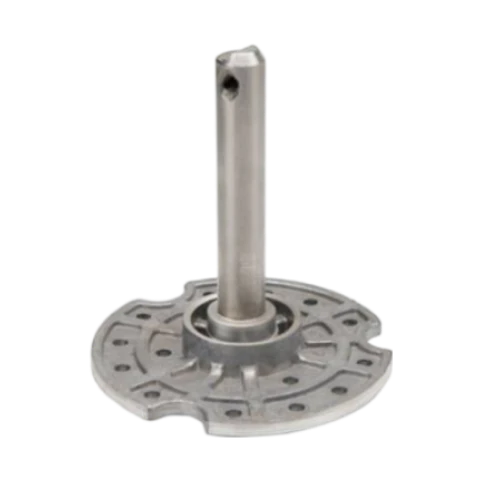
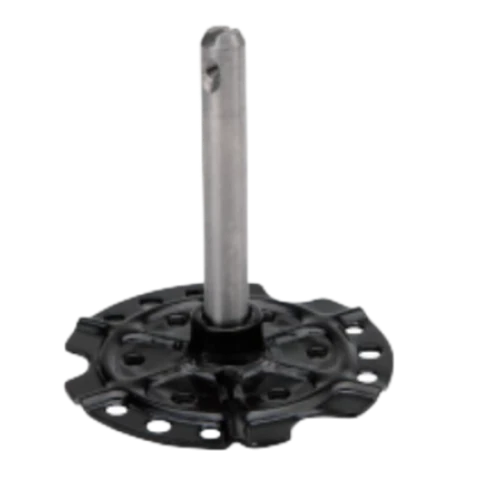
Axle Plate — Die Casting, Stamping & CNC Machining
Axle plates connect the rotating shaft to the disc or drum structure, transferring torque and providing positional support. We produce axle plates across three manufacturing methods — insert die casting, stamping, and CNC machining — covering different structural requirements, load capacities, and cost targets. All produced in-house from tooling through final inspection.
- Multiple manufacturing methods under one roof — insert die casting, stamping, CNC
- Insert cast version: precision-machined shaft pre-embedded in mold before casting
- Stamped version: axle and disc formed as one piece, surface electrophoresis finish
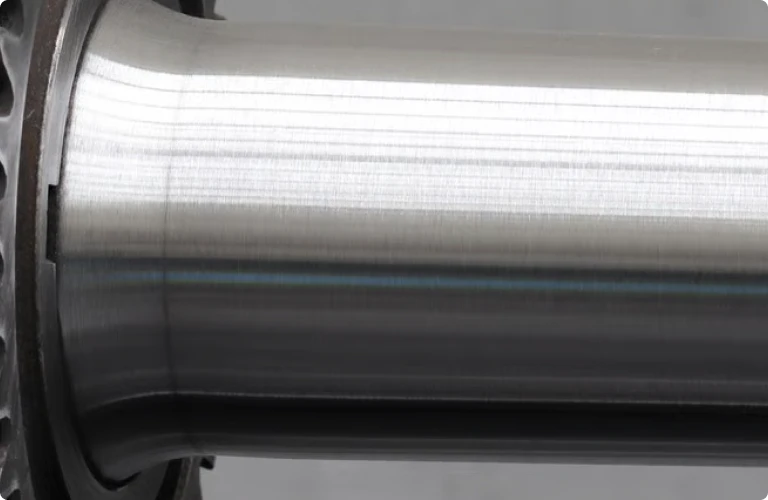
- CNC version: fully machined for applications requiring tighter tolerances
- In-house mold design and tooling — no third-party dependency
- CMM and X-ray inspection available
- Long-term OEM supply to major home appliance brands
Service & Delivery
Origin: Jiangyin, Jiangsu, China
OEM/ODM: Works from 2D drawings, 3D CAD files, or physical samples
Process Options: Insert die casting, stamping, or CNC machining — we advise on the right method for your application
Tooling: In-house design and manufacturing, mold ownership with the client
Lead Time: Mold 4–6 weeks / First samples within 2 weeks of mold completion / Production 15–25 days
MOQ: No fixed minimum — trial batches and annual programs both supported
Surface Treatment: Electrophoresis, shot blasting, powder coating
Delivery: FOB, CIF, DDP — shipping globally from Jiangyin
Quality: IATF 16949, ISO 9001, ISO 14001 certified
Specifications
| Parameter | Insert Die Cast | Stamped | CNC Machined |
|---|---|---|---|
| Manufacturing Process | Insert die casting — shaft pre-embedded in mold before casting | Stamping — axle and disc formed as one piece | CNC turning and milling from solid billet |
| Material | Aluminum alloy (plate) + steel (shaft insert) | Steel sheet | Steel or aluminum alloy billet |
| Dimensional Tolerance | ±0.1 mm (general); critical features post-machined | ±0.1–0.2 mm | ±0.01–0.05 mm |
| Surface Roughness | Ra 3.2–6.3 μm (as cast) | Ra 1.6–3.2 μm | Ra 0.4–1.6 μm |
| Surface Treatment | Shot blasting | Electrophoresis | Anti-rust coating; powder coating available |
| Structural Form | Shaft and plate integrated via insert casting | One-piece stamped form | Machined from solid; assembly also available |
| Typical Application | Home appliance drum systems, medium load | High-volume appliance components, cost-sensitive | Precision equipment, custom or low-volume |
| Tooling | In-house die casting mold | In-house progressive die | CNC program — no hard tooling required |
| Press / Machine Equipment | 160T–1,250T die casting machines | 125T–200T press brakes; 100T–500T hydraulic presses | CNC lathes, machining centers (FANUC) |
| Quality Inspection | CMM dimensional verification, X-ray imaging, image measuring instrument | ||
| Certifications | IATF 16949, ISO 9001, ISO 14001, ISO 45001 | ||
| Customization | OEM/ODM — 2D drawings, 3D CAD files, or reference samples | ||
| Mold / Tooling Lead Time | 4–6 weeks | 3–5 weeks | No tooling required |
| First Sample Lead Time | Within 2 weeks after tooling completion | 1–2 weeks from drawing confirmation | |
| Production Lead Time | 15–25 days | ||
| MOQ | Flexible — trial batches to annual volume programs | ||
| Origin | Jiangyin, Jiangsu, China | ||
| Delivery Terms | FOB, CIF, DDP available | ||
Axle Plates by Application
- Washing Machine Drum Base
- Dryer Drum Base
- Dishwasher Pump Assembly
- Air Conditioner Fan Motor Base
- Electric Motor End Assembly
- Power Tool Gear Base
- Automotive Seat Adjustment Mechanism
- Industrial Gearbox Plate
- Agricultural Machinery Drive Plate
- Custom Non-Standard Axle Plate

MORE ABOUT MEITUO
Meituo is a metal parts manufacturer based in Jiangyin, China, founded in 1999. Our 33,000 m² facility integrates mold design, die casting, machining, stamping, surface treatment, and assembly. We hold IATF 16949 and ISO 9001 certifications and supply OEM parts to home appliance, automotive, and industrial customers in over 30 countries.








FAQ
What types of axle plates does Meituo manufacture?
What is the minimum order quantity for axle plates?
How long does it take from drawing to first sample?
Can you advise on which manufacturing process suits our application?
Do you own the molds, or does the customer?
What surface treatments are available for axle plates?
Axle Plate Selection Guide: Materials, Process Choice, and What Matters in Production
How an Axle Plate Works
An axle plate functions as the mechanical interface between a rotating axle and a larger disc or drum body. When the axle rotates, the plate transmits that torque outward into the drum or disc structure. At the same time, the plate constrains the axle radially, maintaining its position relative to the surrounding assembly. This dual role — torque transmission and positional constraint — means both the shaft interface geometry and the plate body stiffness matter for how well the part performs in service.
In a washing machine drum system, for example, the axle plate sits at the base of the inner drum. During a spin cycle, it has to transmit high rotational speeds and absorb the unbalanced loads created by wet laundry. Any looseness at the shaft interface, or deformation in the plate body under load, shows up as vibration or noise in the finished machine.
Material Selection
Aluminum Alloy
Aluminum alloy is the standard plate body material for die cast axle plates. It offers a good combination of low weight, corrosion resistance, and castability. The most commonly used die casting aluminum alloys — including aluminum-silicon grades — provide adequate strength for home appliance drum applications while keeping part weight low. Aluminum also dissipates heat well, which matters in motor-adjacent applications.
Steel
Steel is used for stamped axle plates and for the shaft insert in insert die cast parts. In stamped versions, the entire plate and shaft form is produced from steel sheet, giving a heavier but structurally simple one-piece part. In insert cast versions, only the shaft is steel — chosen for its hardness and wear resistance at the bearing interface — while the plate body remains aluminum.
Key Quality Parameters
| Parameter | Why It Matters | How We Control It |
|---|---|---|
| Shaft concentricity | Off-center shaft causes vibration and uneven bearing load | Precision pre-machining of insert; CMM verification after casting |
| Plate flatness | Warped plate creates misalignment in drum or disc assembly | Controlled via mold cooling design and post-process inspection |
| Shaft seat interference fit | Loose fit causes shaft movement under load | CNC post-machining to final tolerance; CMM batch verification |
| Internal porosity (die cast) | Voids reduce structural strength | X-ray inspection on critical batches |
| Surface corrosion resistance | Rust or oxidation degrades interface surfaces over time | Shot blasting + coating; electrophoresis for stamped parts |
Process Selection Guide
Choosing the right manufacturing method for an axle plate comes down to three variables: required tolerance, production volume, and structural requirements.
If your application needs an integrated shaft-plate assembly with medium-to-high load capacity and you're running medium-to-large volumes, insert die casting is the natural choice. The shaft and plate body are produced as a single component, eliminating assembly steps and reducing the risk of interface looseness over time.
If you're running very high volumes and your design allows for a one-piece steel construction, stamping will give you the lowest unit cost. Progressive die tooling produces parts efficiently and consistently, and electrophoresis provides adequate corrosion protection for most appliance applications.
If your geometry is non-standard, your volumes are low, or you need tolerances tighter than die casting or stamping can reliably deliver, CNC machining is the right route. There's no tooling lead time, and the process is flexible enough to accommodate design changes without retooling costs.
Why In-House Tooling Capability Matters
For OEM clients sourcing axle plates on an ongoing basis, in-house tooling capability at the supplier level has a direct impact on development speed and revision cost. When the mold or die is designed and built by the same team that runs production, engineering changes can be implemented without coordinating across multiple vendors. At Meituo, mold design, die casting, stamping, and CNC machining are all handled within our facility in Jiangyin. This is part of why clients including Hisense, Midea, and Electrolux have maintained long-term supply relationships with us across multiple product generations.