

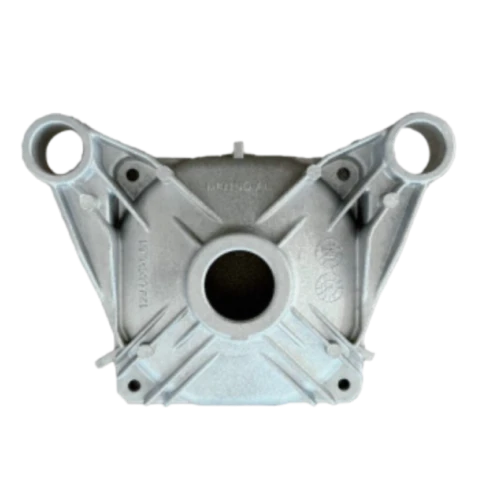
Motor End Shield — Aluminum Die Casting
Aluminum die-cast motor end shields for home appliance and industrial motor platforms. We supply OEM clients who need precise bearing seat dimensions, consistent coaxiality, and reliable surface finish across production volumes. Produced in-house from mold design through final inspection.
- Coaxiality within 0.05 mm
- Precise bearing seat dimensions — consistent across batches
- Shot blasting and precision machining as standard
- In-house mold design using UG 3D modeling and JSCAST simulation
- X-ray inspection and CMM verification available
- Long-term OEM supply to major home appliance brands
Service & Delivery
Origin: Jiangyin, Jiangsu, China
OEM/ODM: Custom tooling from your drawings or reference samples
MOQ: Flexible — supports sample orders through to annual volume programs
Lead Time: Mold 4–6 weeks / First samples 1–2 weeks after mold / Production 15–25 days
Surface Treatment: Shot blasting, precision machining, powder coating available
Delivery Terms: FOB, CIF, DDP available
Quality System: IATF 16949, ISO 9001, ISO 14001 certified
Serving Brands: Hisense, Midea, Samsung, Electrolux, BSH, Whirlpool and more
Specifications
| Parameter | Specification |
|---|---|
| Product Name | Motor End Shield / Motor End Cover |
| Manufacturing Process | Aluminum alloy die casting with precision post-machining |
| Coaxiality | Within 0.05 mm |
| Surface Treatment | Shot blasting (standard); powder coating available |
| Post-Processing | Precision CNC machining on bearing seat and mating faces |
| Tooling Capability | In-house mold design using UG 3D modeling and JSCAST simulation |
| Die Casting Equipment | 20 aluminum alloy die casting machines, 160T–1,250T |
| Quality Inspection | CMM dimensional verification, X-ray imaging, image measuring instrument |
| Quality Certifications | IATF 16949, ISO 9001, ISO 14001, ISO 45001 |
| Customization | OEM/ODM — from customer drawings or reference samples |
| Mold Lead Time | 4–6 weeks |
| First Sample Lead Time | 1–2 weeks after mold completion |
| Production Lead Time | 15–25 days |
| MOQ | Flexible — sample orders to annual volume programs |
| Origin | Jiangyin, Jiangsu, China |
| Delivery Terms | FOB, CIF, DDP available |
How We Manufacture Motor End Shield
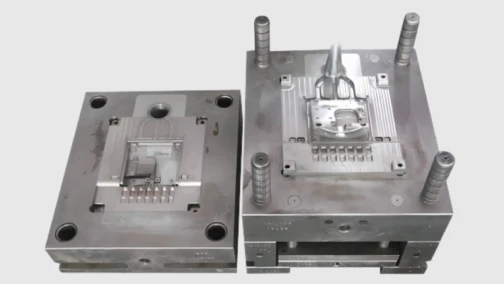
Mold
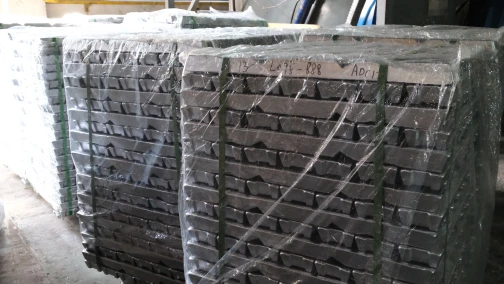
Raw Materials
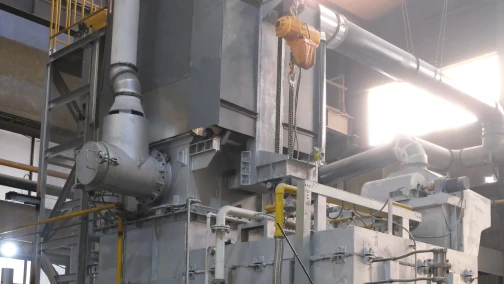
Smelting
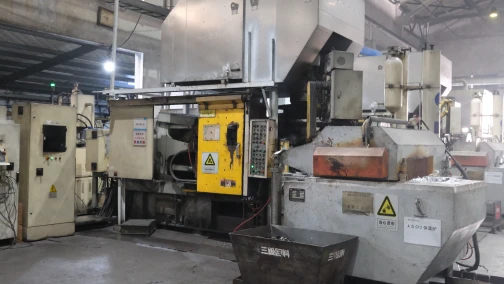
Die Casting
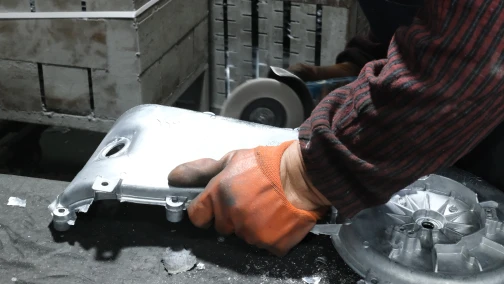
Processing
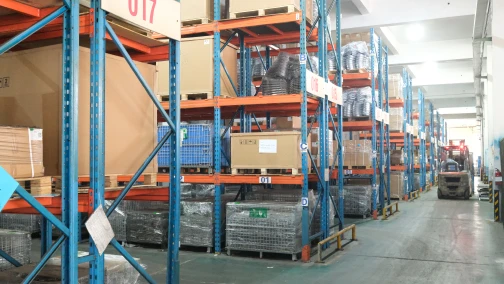
Warehouse

MORE ABOUT MEITUO
Meituo is a metal parts manufacturer based in Jiangyin, China, founded in 1999. Our 33,000 m² facility integrates mold design, die casting, machining, stamping, surface treatment, and assembly. We hold IATF 16949 and ISO 9001 certifications and supply OEM parts to home appliance, automotive, and industrial customers in over 30 countries.








FAQ
Can you manufacture motor end shields to our drawings or samples?
What tolerance can you hold on the bearing seat?
What surface treatments are available?
Motor End Shield: What It Is, How It Works, and What to Look for in a Manufacturer
What Is a Motor End Shield?
A motor end shield — also referred to as a motor end cover, end bracket, or end bell — is the structural component mounted at one or both ends of an electric motor frame. It serves three primary functions: supporting the rotor shaft bearing, maintaining precise shaft alignment relative to the stator, and enclosing the motor internals against dust and debris.
In home appliance motors — washing machine drive motors, dryer motors, and similar — the end shield is a critical precision part. Any deviation in bearing seat geometry or coaxiality directly affects how the rotor runs, how much vibration is generated, and how long the motor lasts in service.
Why Aluminum Alloy Is the Standard Material
Most OEM motor end shields for home appliance and light industrial applications are produced from aluminum alloy via high-pressure die casting. The material choice is driven by a combination of practical factors.
| Property | Aluminum Alloy Die Cast | Cast Iron |
|---|---|---|
| Weight | Light — approximately one third the density of iron | Heavy |
| Thermal conductivity | Good — assists motor heat dissipation | Lower |
| Dimensional accuracy | High — tight tolerances achievable in die casting | Moderate — requires more post-machining |
| Corrosion resistance | Good — especially with surface treatment | Prone to rust without treatment |
| Production volume suitability | High — die casting supports large batch production efficiently | More suitable for low-volume or heavy-duty applications |
For home appliance motor platforms where weight, thermal performance, and high-volume production efficiency all matter, aluminum die casting is the clear choice. Cast iron end shields are still used in some heavy-duty industrial motors, but they are not the norm in modern appliance manufacturing.
Key Applications
Motor end shields produced via aluminum die casting are used across a range of motor-driven home appliance and light industrial applications, including washing machine drive motors, dryer motors, air conditioner fan motors, pump motors, and small industrial equipment. The specific geometry varies by motor frame size and platform, but the functional requirements — bearing support, shaft alignment, enclosure — are consistent across applications.
Manufacturing Process
Mold Design and Simulation
The process starts with mold design. A motor end shield typically has a bearing seat, bolt hole pattern, and register fits that all need to hold tight tolerances in production. Our mold engineers design tooling in-house using UG 3D modeling software and JSCAST casting flow simulation. Before any steel is cut, we validate gate placement, check for potential shrinkage areas around the bearing seat, and confirm that the cooling circuit design will support dimensional consistency across the full cavity.
Die Casting
Parts are produced on our aluminum alloy die casting machines, which range from 160T to 1,250T. The machine tonnage selected for a given end shield depends on the projected part area and wall section. Molten aluminum is injected into the mold at high speed and pressure, producing a near-net-shape part in a single cycle. Process parameters — injection velocity, intensification pressure, mold temperature — are set per part and monitored in production.
CNC Post-Machining
Die casting gets you close, but the bearing seat and shaft register fits on a motor end shield require post-machining to hit final tolerance. We run CNC lathes and machining centers in our metalworking workshop to bring critical dimensions to spec. Coaxiality on our motor end shields is held within 0.05 mm. This step is what separates a production-ready motor component from a raw casting.
Surface Treatment and Inspection
Shot blasting is standard after casting and before machining. Powder coating is available where required. Before shipment, parts are checked on CMM equipment — we run Zeiss 3D coordinate measuring machines and image measuring instruments in our quality lab. X-ray inspection is available for internal defect detection on critical batches. Our quality process operates under IATF 16949, the same standard applied to automotive component supply chains.
What to Look for When Sourcing Motor End Shields
If you are evaluating suppliers for motor end shield components, the parameters that matter most in practice are bearing seat tolerance, coaxiality, and batch-to-batch dimensional consistency. A supplier who can hold tight tolerances on a sample but cannot maintain them across a production run creates assembly problems downstream. Ask for CMM reports from production batches, not just first article inspection data.
Mold ownership and in-house tooling capability also matter for long-term supply relationships. If the tooling is owned and managed by the supplier, revision cycles are faster and you are not dependent on a third-party mold shop for changes. We design and build all tooling in-house, which gives our clients direct control over the development process.