

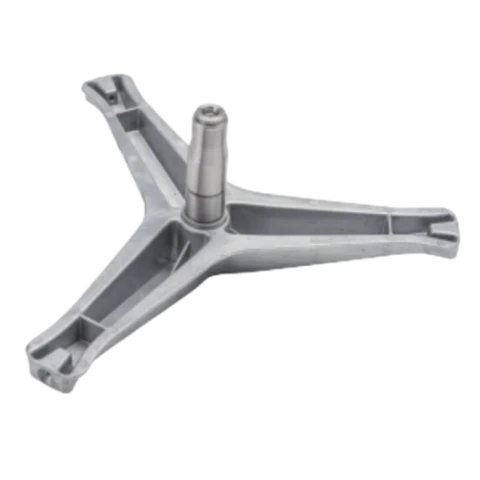
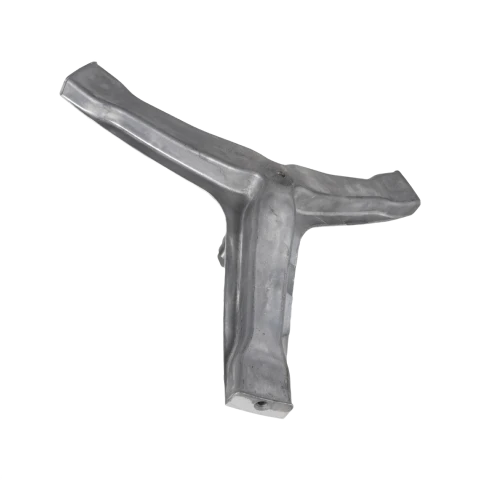
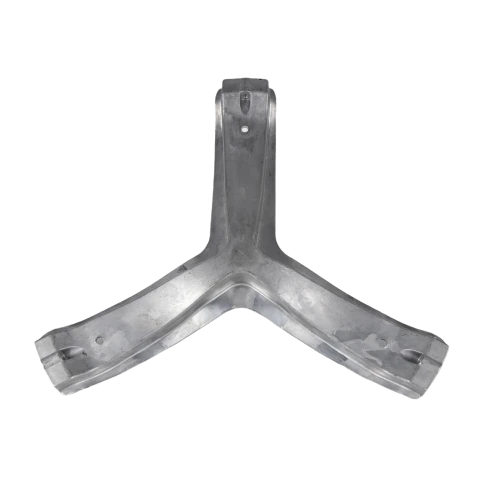
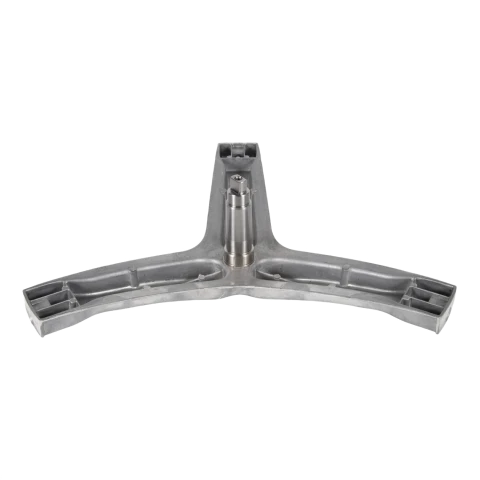
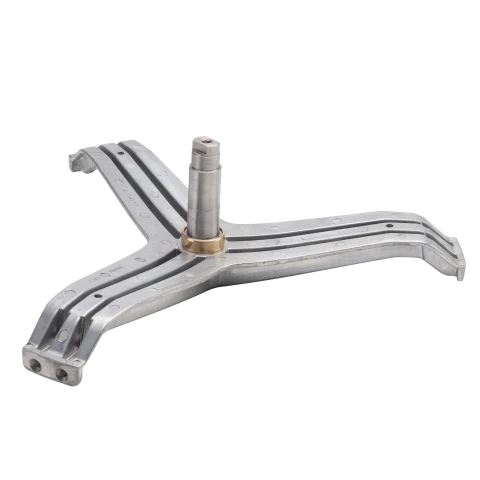
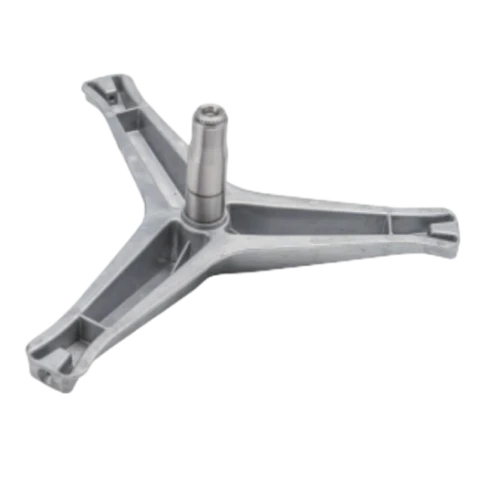
Aluminum Die Casting Washing Machine Spider
We manufacture aluminum die casting washing machine spiders with embedded steel shafts for washer OEMs. Our spider assemblies support the drum during high-speed spin cycles, with CNC machined bearing seats and balanced weight distribution for low vibration performance. Each spider is produced, machined, and inspected in our facility as a finished assembly ready for drum installation.
- Insert die casting with pre-embedded steel shaft for one-piece spider-shaft assembly
- CNC machined bearing seat with tolerance controlled to 0.005 mm
- Aluminum alloy ADC12 die casting with cold chamber process
- Three-arm and cross-arm spider configurations available
- Mold life exceeding 100,000 shots per set
- Compatible with major front-load washer drum designs
- Surface treatment options including shot blasting, electrophoresis, and anti-rust coating
- Vibration and balance requirements verified before shipment
Service & Delivery
Origin: Jiangyin, Jiangsu, China
OEM/ODM: Custom spider design to your drum specifications
MOQ: Flexible, from sample orders to annual volume programs
Lead Time: Mold 4–6 weeks, samples 1–2 weeks after mold, production 15–25 days
Surface Treatment: Shot blasting, electrophoresis, anti-rust coating
Delivery Terms: FOB, CIF, DDP available
Quality System: IATF 16949, ISO 9001 certified
Serving Brands: Hisense, Electrolux, Samsung, BSH, Whirlpool, and more
Specifications
| Parameter | Specification |
|---|---|
| Product Name | Washing Machine Drum Spider / Tripod Bracket Assembly |
| Casting Material | Aluminum alloy ADC12 |
| Casting Process | Cold chamber die casting with pre-embedded steel shaft |
| Spider Configuration | Three-arm and cross-arm designs available |
| Bearing Seat Tolerance | Concentricity 0.005 mm |
| Secondary Machining | CNC turning, drilling, deburring |
| Surface Treatment | Shot blasting, electrophoresis, anti-rust coating |
| Application | Front-load drum washing machines |
| Quality System | IATF 16949, ISO 9001 |
Washing Machine Spider — Precision Specs
Serving Major Appliance OEMs for Over Two Decades
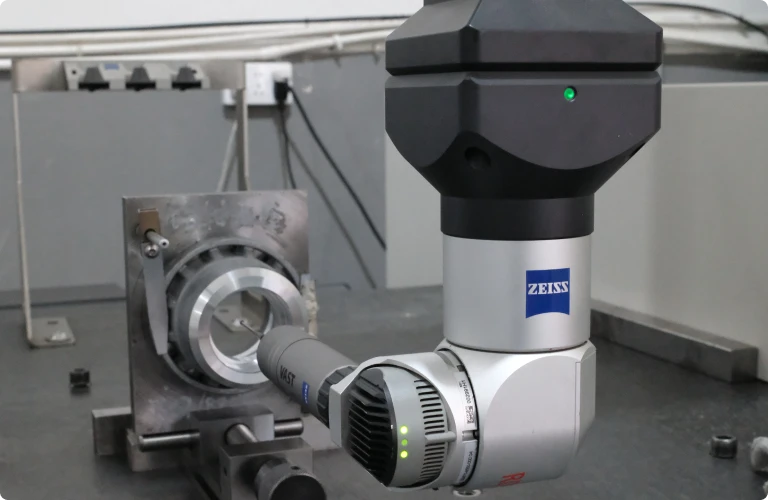
Quality Control and Certifications
How We Manufacture Washing Machine Spiders
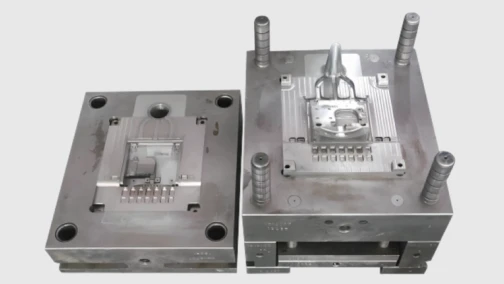
Mold
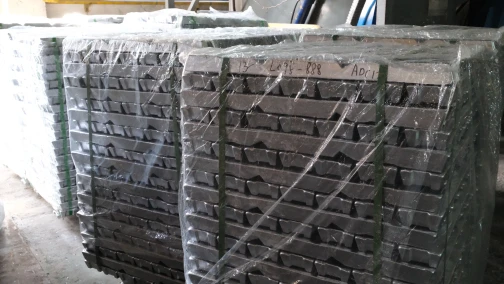
Raw Materials
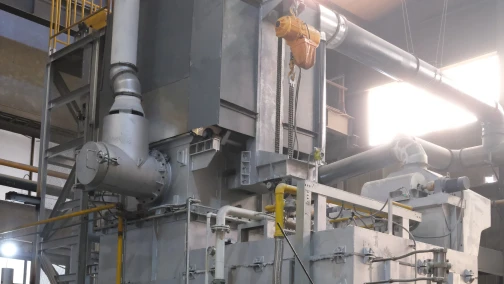
Smelting
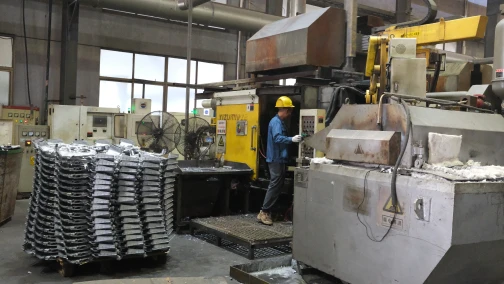
Die Casting
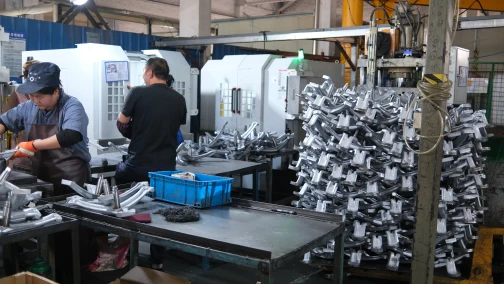
Processing
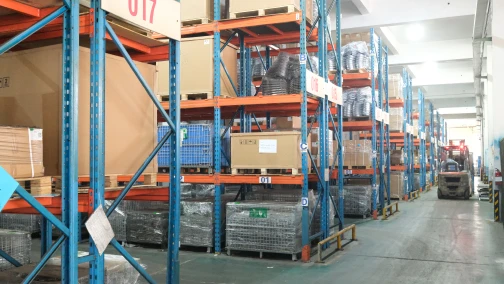
Warehouse

MORE ABOUT MEITUO
Meituo is a metal parts manufacturer based in Jiangyin, China, founded in 1999. Our 33,000 m² facility integrates mold design, die casting, machining, stamping, surface treatment, and assembly. We hold IATF 16949 and ISO 9001 certifications and supply OEM parts to home appliance, automotive, and industrial customers in over 30 countries.








FAQ
What materials do you use for washing machine spiders?
Can you produce spiders based on our drawings or samples?
What is the typical lead time for tooling and first samples?
What is your minimum order quantity?
Everything You Need to Know About Customizing a Washing Machine Spider for Your Brand
What Is a Washing Machine Spider and What Does It Do?
A washing machine spider — also called a drum spider, washer spider, or tripod — is the metal bracket that connects the inner drum of a front-load washing machine to its central shaft. It sits at the back of the drum and transfers the rotational force from the motor shaft into the drum itself. Without it, the drum cannot spin.
The spider takes on significant mechanical stress during every wash cycle. It has to handle the rotational load, absorb vibration, and maintain precise alignment between the drum and the bearing assembly. This is why dimensional accuracy matters — even a small deviation in the bearing seat or arm geometry affects how the drum runs and how long the machine lasts.
Types of Washing Machine Spiders
Washing machine spiders are generally categorized by material and arm configuration. Understanding the differences helps when specifying a part for a new platform or replacing an existing design.
By Material
| Material | Characteristics | Common Use |
|---|---|---|
| Aluminum alloy (die cast) | Lightweight, good corrosion resistance, high dimensional accuracy achievable | Mainstream front-load washing machines, most OEM platforms |
| Cast iron | Higher weight, strong, lower cost tooling | Older platform designs, some heavy-duty commercial units |
| Zinc alloy (die cast) | Good surface finish, suitable for smaller load designs | Compact or lower-capacity machines |
By Arm Configuration
Most residential washing machine spiders use a three-arm design — hence the name tripod. The arm count, arm length, and hub geometry vary by drum diameter and platform specification. Some larger commercial drum designs use four or five arms. The arm profile also affects structural stiffness; a thicker cross-section reduces flex under load but adds weight.
Key Performance and Quality Factors for Washing Machine Spiders
When evaluating a washing machine spider — whether for a new OEM project or a replacement sourcing program — these are the technical parameters that actually determine product performance.
Bearing Seat Tolerance
The bearing seat is where the spider interfaces with the drum bearing. Tolerance here directly affects how smoothly and quietly the drum runs. A loose fit causes noise and accelerated bearing wear. Our standard bearing seat tolerance is ±0.005 mm.
Runout
Runout refers to how much the rotating assembly deviates from true circular motion. Excessive runout causes vibration, noise, and uneven load distribution during spin cycles. We control runout within 0.3 mm across production batches, verified by CMM measurement before shipment.
Coaxiality
The central shaft hole and the arm geometry must be concentric. Poor coaxiality causes the drum to run off-center, which creates vibration and stresses the bearing prematurely. Our coaxiality standard for tripod products is within 0.05 mm.
Surface Treatment
Aluminum die-cast spiders are typically shot blasted after casting to clean the surface and improve adhesion for any subsequent treatment. For applications that require corrosion protection or specific surface appearance, powder coating or other treatments can be applied.
Internal Porosity
Die-cast aluminum parts can develop internal voids during casting if process parameters are not well controlled. Porosity weakens the part structurally. We use X-ray inspection to detect internal defects, and our process targets porosity levels within defined limits for structural components.
Why Major Appliance Brands Have Relied on Us for Years
We supply washing machine tripods as a core product line, not a peripheral one. Hisense, Midea, Little Swan, Samsung, Electrolux, BSH, and Whirlpool are among the brands we work with on an ongoing basis. The reason these relationships have lasted comes down to a few practical factors.
Our mold department designs tooling in-house using UG 3D modeling software and JSCAST casting simulation. This means we can assess fit, wall thickness, gating, and shrinkage before cutting steel — which shortens the development cycle and reduces revision rounds. We have nearly 30 CNC machining centers and EDM machines in our mold shop alone.
On the production side, our die casting workshop operates 20 aluminum alloy machines from 160T to 1,250T with an annual output capacity of close to 10,000 tons of die-cast components across all product lines. For washing machine spiders specifically, we run dedicated tooling with established process parameters, not ad-hoc setups.
We hold IATF 16949 certification, which is the automotive-grade quality management standard. Applying this standard to appliance component manufacturing means our process controls, traceability, and PPAP documentation practices are held to a higher bar than ISO 9001 alone requires. Multiple global brand clients have audited our facility and accepted us into their approved supplier lists as a result.
Customization: What We Can Work With
If you are developing a new drum platform or need a spider that matches an existing design, we can work from 2D drawings, 3D CAD files, or a physical reference sample. Our engineering team will review the design for manufacturability — wall thickness, draft angles, core placement — and flag any issues before tooling begins. First samples for standard washing machine spider molds are typically available within 30 to 45 days of drawing confirmation.
For brands sourcing across multiple regions, we can also support documentation requirements including material certifications, dimensional reports, and RoHS compliance data. Our lab is equipped with a fluorescence spectrometer for material composition verification.