On March 28, 2026, Iranian missile and drone strikes hit two of the world's largest aluminum smelting facilities: Emirates Global Aluminium's (EGA) Al Taweelah smelter in Abu Dhabi and Aluminium Bahrain's (Alba) facility in Bahrain. The attacks followed a pattern of retaliatory strikes across the Gulf after US-Israeli operations against Iranian industrial infrastructure. For global aluminum supply, the impact was immediate and severe. LME aluminum surged 6% to $3,492 per tonne in early Monday trading. The US Midwest premium hit a record $1.10 per pound. The situation marked a fundamental shift: from logistics disruption to direct production capacity loss.
What Happened and Who Was Hit
EGA's Al Taweelah smelter, one of the world's largest premium aluminum facilities, sustained what the company described as "significant damage." Iran's strikes destroyed a power substation, forcing the potlines into an uncontrolled shutdown. In aluminum smelting, potlines operate as continuous electrolytic processes at extremely high temperatures — a power loss causes the molten metal to solidify inside the smelting circuits. Recovering from a frozen potline requires physically removing solidified metal and rebuilding the cells, a process that typically takes six to twelve months. EGA began offering to sell its alumina cargoes for April–June delivery after the strike, confirming that the smelter could no longer consume its own feedstock.
Alba, the world's largest single-site aluminum smelter by capacity, was already under pressure before the strikes. On March 4, it declared force majeure citing Strait of Hormuz closure, which prevented shipments and disrupted inbound alumina supplies. By March 15, it had shut down 19% of capacity in a controlled reduction. After the March 28 attack, Alba reported two employees injured and was operating at approximately 30% of its 1.62 million tonne annual capacity.
Qatar's Qatalum had already shut down production entirely on March 3 due to natural gas shortages tied to the conflict.
| Producer | Country | Annual Capacity | Status (post-March 28) |
|---|---|---|---|
| EGA — Al Taweelah | UAE | 1.6 Mt | Halted — potlines frozen, 6–12 month recovery |
| EGA — Jebel Ali | UAE | ~0.8 Mt | Operating with limited resources |
| Aluminium Bahrain (Alba) | Bahrain | 1.62 Mt | ~30% capacity, force majeure declared |
| Qatalum | Qatar | ~0.6 Mt | Shutdown — gas supply disruption |
| Sohar Aluminum | Oman | ~0.4 Mt | Operating — rerouted Gulf export hub |
| Ma'aden Aluminum | Saudi Arabia | ~0.7 Mt | No reported damage, monitoring |
Why the Gulf Matters to Global Aluminum Supply
The Gulf region accounts for approximately 9% of global primary aluminum production, with roughly 80% of output exported. For the United States, the exposure was concentrated and built up rapidly. After the US and UK banned Russian aluminum from major exchanges in April 2024, Western buyers pivoted toward Gulf sources. UAE and Bahrain exports to Western markets increased 26% and 15% respectively through 2025. By the first eleven months of 2025, the US had imported 584,000 tonnes of primary aluminum from the UAE and Bahrain combined — 21% of total US aluminum imports, making the UAE the third-largest supplier after Canada and South Africa.
That dependency built up in less than two years. The strikes reversed it abruptly. US domestic inventories had already dropped from approximately 750,000 tonnes at the start of 2025 to under 300,000 tonnes before the attacks, partly due to stockpiling ahead of tariff escalations. The combination of constrained domestic production, Russia's exclusion, and now Gulf supply loss creates a structural squeeze in the US market that cannot be resolved quickly.
Wood Mackenzie estimated that the ongoing Middle East conflict could remove 3 to 3.5 million tonnes of aluminum output in 2026. EGA and Alba alone account for over 3.2 million tonnes of annual capacity.
The Price Impact: Before and After the Strikes
| Date / Event | LME Aluminum Price | US Midwest Premium |
|---|---|---|
| February 26 (pre-conflict) | ~$3,157/tonne | ~$0.25/lb |
| March 5 (force majeure, logistics) | ~$3,418/tonne (+8.3%) | Rising |
| March 31 (day after strikes) | ~$3,492/tonne (+10.6%) | Record $1.10/lb |
| April 7 (post-assessment peak) | ~$3,600/tonne (+12.3%) | Elevated |
Aluminum has risen more than 12% since the conflict began, outperforming most other industrial metals. UBS revised its 2026 aluminum supply growth forecast down to 0.3%, from a prior estimate of 2.4%, citing the Gulf disruption and limited European capacity. European duty-paid premiums surged from around $200 per tonne over LME cash in mid-2025 to over $340 per tonne.
How the Supply Chain Disruption Flows Downstream
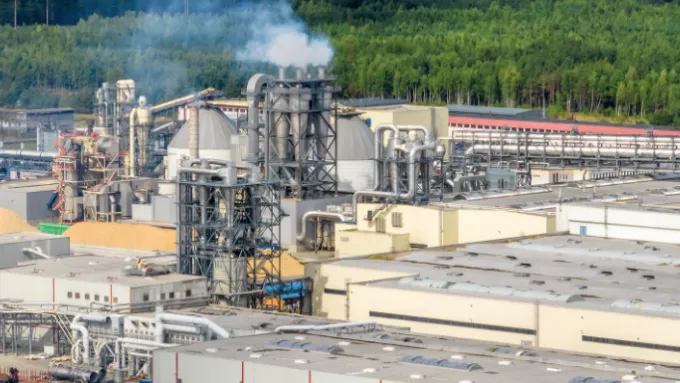
EGA and Alba produce primary aluminum — ingot (P1020), sow, and extrusion billet. These are the raw feedstock inputs for downstream converters: rolling mills, extruders, and foundries that produce sheet, plate, extrusions, and castings for end-use industries. The disruption does not stop at the smelter; it flows through every tier that uses primary metal as an input.
The sectors most directly exposed:
- Automotive: EGA supplies primary metal to major global OEMs as feedstock for body-in-white sheet, structural extrusions, and powertrain castings. Rising primary metal costs and tighter allocation flow through to Tier-1 and Tier-2 suppliers.
- Packaging: Can sheet and foil stock require rolling slab from primary producers. Tighter slab availability pushes spot premiums higher for beverage and food packaging manufacturers.
- Aerospace: Both EGA and Alba are certified suppliers to the aerospace sector. EGA produces premium alloys used by Boeing and Airbus. Aerospace-grade primary metal requires strict chemical specifications — alternative sources must pass qualification, which takes time.
- Construction and infrastructure: Extrusion billet for curtain wall, structural framing, and cladding applications flows heavily from Gulf producers to European and Asian markets.
- Energy infrastructure: Power transmission conductors, solar panel frames, wind turbine components, and battery enclosures all depend on primary aluminum supply chains.
For manufacturers producing aluminum die cast components — including motor housings, bearing housings, structural brackets, and enclosures — the upstream impact arrives through ingot and alloy pricing. Gulf-origin primary aluminum feeds into the secondary alloy markets that supply die casting foundries. Tighter primary supply and higher LME prices translate into higher alloy ingot costs, compressing margins across the aluminum casting supply chain.
Structural Context: The Supply Problem Existed Before the Strikes
The Gulf crisis accelerated a tightening that was already developing. Several factors had been building through 2025:
- China's 45 million tonne production cap: China produces roughly 58–60% of global aluminum. The cap, imposed under energy and carbon control policy, had been periodically approached, limiting further expansion. China's 2025 production growth slowed.
- Long lead times for new smelters: New greenfield aluminum smelting capacity takes 5–7 years to build. The industry's 2021–2023 underinvestment period is now constraining supply growth. UBS estimated 2026 supply growth at just 0.3% before the Gulf disruptions.
- Demand growth from EVs and clean energy: Electric vehicles typically use 25–40% more aluminum than conventional vehicles. Renewable energy infrastructure — solar frames, wind towers, transmission cables, battery enclosures — adds structural demand that did not exist at prior market peaks.
- Russian aluminum exclusion from Western markets: After the April 2024 LME ban, Russian exports to Western markets fell 45%, permanently shifting sourcing patterns toward Gulf and Canadian supply.
The global aluminum market was already expected to run a slight deficit of approximately 140,000 tonnes in 2026 before the March strikes. Analyst estimates at the time of the attacks suggested a deficit three to five times larger depending on how long the Gulf outages persist.
The EGA–Century Aluminum US Smelter Project
In January 2026, EGA and Century Aluminum announced a $4 billion joint venture to build a 750,000 tonne per year primary aluminum smelter in Inola, Oklahoma — the first new US smelter in nearly 50 years. EGA holds 60% and Century holds 40%. The project was intended to more than double current US production and reduce the 85% import dependency that characterizes the US primary aluminum market. Construction was targeted to begin by end of 2026.
With EGA's Al Taweelah smelter now materially impaired and the company diverting resources to assessment and recovery, the timeline and financial footing of the Oklahoma project face increased uncertainty. US policymakers had cited this project as a cornerstone of the domestic aluminum supply strategy; its delay would compound the structural import dependency that the Gulf strikes have exposed.
What This Means for Buyers of Aluminum Parts and Components
For OEM procurement teams and sourcing managers buying custom aluminum components, the practical implications are straightforward:
- Ingot and alloy pricing will remain elevated. LME aluminum and regional premiums are the baseline inputs for all aluminum alloy pricing. With Gulf supply disrupted and global inventories near multi-year lows, elevated premiums are likely to persist through 2026 and into 2027.
- Allocation pressure at secondary alloy level. Primary aluminum shortage flows into secondary alloy markets. Die casting alloys (A380, ADC12, A356) and wrought alloy billet are all priced against LME. Mills and foundries will face allocation constraints from their upstream suppliers before those constraints reach OEM buyers.
- Review long-term supply contracts. Force majeure declarations at multiple Gulf facilities have set a precedent for supply chain contract risk. Buyers with long-term fixed-price agreements should verify whether their suppliers have hedged adequately. Spot buyers face immediate exposure.
- Consider inventory positioning. Given the likely duration of EGA Al Taweelah's recovery timeline (6–12 months minimum for potline restart), the current disruption is not a short-term spike. Building a buffer stock of aluminum-intensive components or alloy inputs may be advisable for programs with tight production schedules.
Sources
Exiger — "Iran Strikes Gulf Aluminum Smelters, Disrupting Global Supply" (April 1, 2026)
https://www.exiger.com/perspectives/iran-gulf-aluminum-strikes-supply-chain-disruption/
AL Circle — "Iranian strikes hit EGA and Alba's aluminium smelters; workers injured, facilities damaged" (April 2, 2026)
https://www.alcircle.com/news/iranian-strikes-hit-ega-and-alba-s-aluminium-smelters-workers-injured-facilities-damaged-117823
S&P Global Commodity Insights — "FACTBOX: Attacks in the Middle East hit Gulf aluminum, steel plants amid war" (March 30, 2026)
https://spglobal.com/energy/en/news-research/latest-news/metals/033026-factbox-attacks-in-the-middle-east-hit-gulf-aluminum-steel-plants-amid-war
AL Circle — "Middle East alumina imports fall 63% YOY in March" / "US aluminium prices break away as tariffs collide with global supply strain" (January–April 2026)
https://www.alcircle.com/news/us-aluminium-prices-break-away-as-tariffs-collide-with-global-supply-strain-117048
ING Think — "Aluminium deficit will support prices in 2026" (December 2025)
https://think.ing.com/articles/aluminium-deficit-will-support-prices-in-2026/
CNBC — "Aluminum prices are surging. Here's how companies are handling the costs" (May 2026)
https://www.cnbc.com/2026/05/05/aluminum-prices-hormuz-ford-molson-coors.html
Al Circle — "Rising Aluminum Prices in 2026: Causes, Supply Shortage, and Industry Impact" (April 2026)
https://www.chaluminium.com/rising-aluminum-prices-in-2026