Cold chamber die casting is the high-pressure route used when the alloy would damage an injection system left in continuous contact with molten metal. The alloy is melted in a separate furnace, transferred into a shot sleeve, and driven into a steel die by a hydraulic plunger. That architecture makes aluminum die casting practical at production scale, and it also explains the process limits buyers need to manage: metal transfer time, air exposure, die thermal load, and machine tonnage. This guide covers the working process, machine components, suitable alloys and parts, quality control, and the information a supplier needs for a cold chamber RFQ.
What Is Cold Chamber Die Casting?
Cold chamber die casting is a high-pressure metal casting process in which molten metal is poured into a cylindrical shot sleeve and injected into a closed die by a hydraulic or mechanical plunger. The melting furnace sits outside the machine. The term "cold chamber" refers to this separation between the melt and the injection system; the sleeve and die still operate at controlled high temperatures.
The design exists mainly to protect the machine. Aluminum and other higher-melting alloys attack ferrous injection components when those components remain submerged in the melt. In a cold chamber machine, the plunger and sleeve contact molten metal only during each short shot cycle. This makes aluminum, magnesium, brass, and selected copper alloys practical for pressure die casting. Aluminum is the dominant use because it combines low density, useful strength, corrosion resistance, and good thermal conductivity in housings, brackets, and structural parts.
How Does the Cold Chamber Die Casting Process Work?
The process follows the metal from an external furnace to a trimmed casting. Each step has a direct effect on filling, internal soundness, cycle stability, and final cost.
- Melt and verify the alloy. Ingots are melted in a central or separate furnace, then held at a controlled temperature. Composition is checked before the metal enters production, and the melt is filtered, degassed, or skimmed as required by the alloy and part specification.
- Transfer a measured shot. A hand ladle or automated ladling system moves a calibrated amount of metal from the holding furnace into the shot sleeve. The transfer needs to be fast and consistent to limit temperature loss, surface oxidation, and turbulence.
- Start the slow-shot phase. The plunger advances gently at first to push air ahead of the metal and reduce wave formation inside the sleeve. A poorly controlled first phase can fold oxides or air into the shot before the metal reaches the die.
- Switch to high-speed filling. At the designed switch point, the plunger accelerates and forces the metal through the gate into the cavity. The fill phase is extremely short for thin-wall aluminum parts, so gate design, venting, and injection profile must work together.
- Apply intensification and cool the part. After filling, pressure is held or increased to feed solidification shrinkage. Die cooling channels remove heat in a controlled pattern so the casting solidifies without excessive distortion, soldering, or hot spots.
- Eject, trim, and inspect. The die opens, ejector pins release the casting, and the biscuit and runner are trimmed away. Depending on the specification, the part then moves to CNC machining, surface finishing, leak testing, dimensional inspection, or X-ray evaluation.
The same sequence sits inside the broader aluminum die casting process from mold design to mass production. Cold chamber engineering focuses on the parts of that workflow shaped by external melting and shot sleeve injection.
Cold Chamber Die Casting Machine: Components and Tonnage
Shot sleeve, plunger, clamping unit, die, cooling, and ejection systems
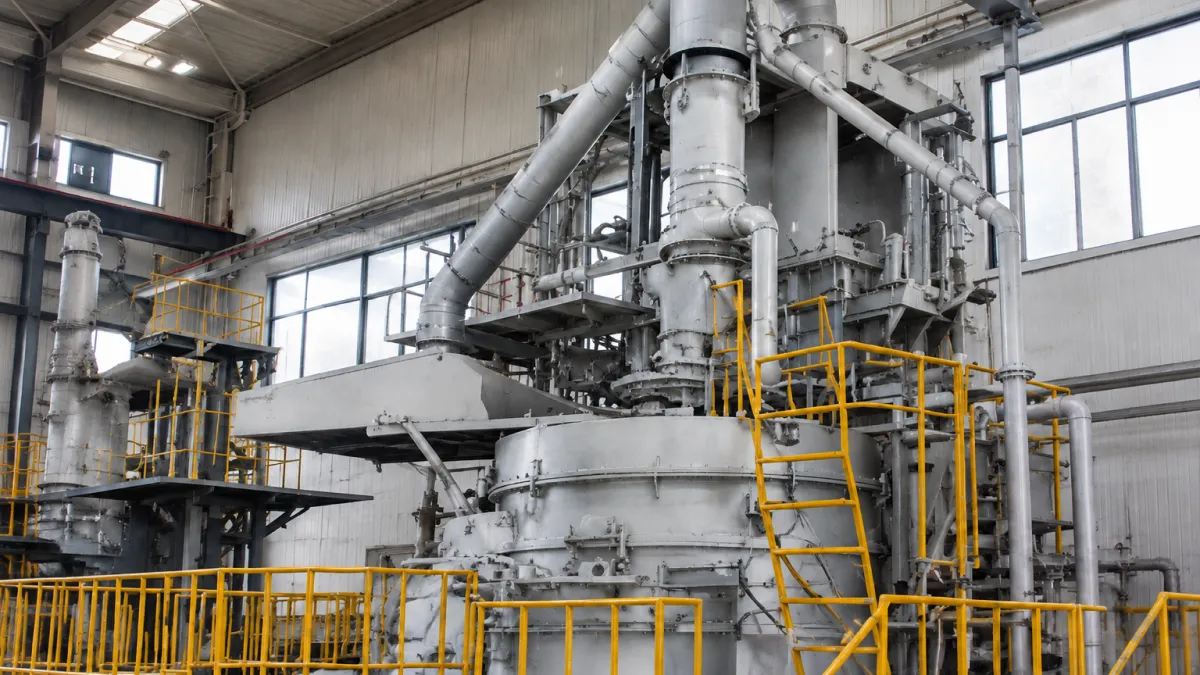
A horizontal cold chamber machine combines five systems: the shot sleeve receives the metal; the plunger drives it into the die; the clamping unit holds the die closed; the die forms the part and carries the gate, runner, vents, overflow, and cooling channels; and the ejection system releases the casting. Machine selection checks these systems together, because a die may fit the platen while clamping force, shot capacity, tie-bar clearance, die height, or the injection curve still falls short.
How projected area and cavity pressure affect clamping-force requirements
The starting calculation is simple: required clamping force equals cavity pressure multiplied by projected area. The projected area is the metal area exposed to cavity pressure, normally including the part, runner, gates, and overflow system. Units must stay consistent, and the cavity pressure used in the calculation is the pressure acting on the metal, not the hydraulic line pressure shown on the machine.
| Input | What the buyer can provide | What the supplier confirms |
|---|---|---|
| Projected area | 3D model, 2D drawing, envelope dimensions | Part plus runner and overflow area under the proposed gate layout |
| Cavity pressure | Critical wall thickness, airtightness, structural requirements | Pressure assumption from alloy, fill pattern, and process window |
| Safety margin | Flash sensitivity and die-condition expectations | Margin set with the die and machine selection |
| Shot size | Estimated part weight and annual volume | Shot weight, sleeve fill fraction, biscuit and runner mass |
| Machine fit | Target timing and any preferred production route | Available tonnage, platen size, die height, and injection capability |
The formula is a screening tool. Meituo runs 20 aluminum cold chamber machines from 160T to 1650T, and final machine assignment is confirmed during DFM, when projected area, shot weight, and clamping margin are known.
Which Alloys and Parts Fit Cold Chamber Die Casting?
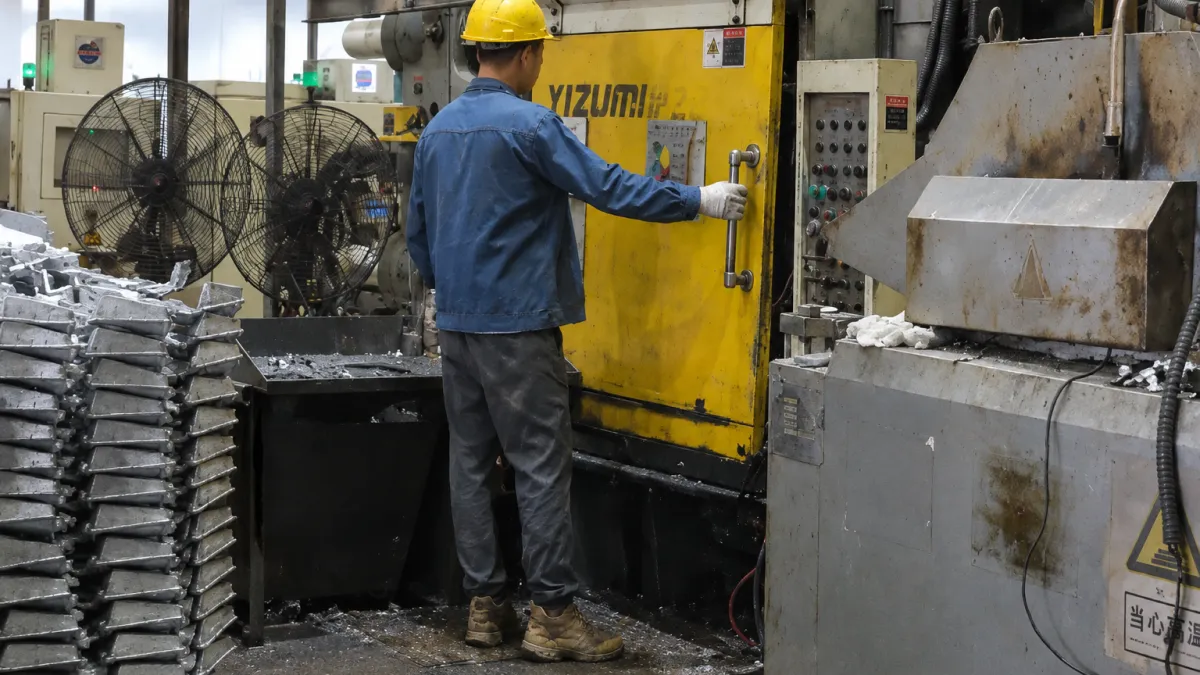
Aluminum alloys are the standard materials for cold chamber die casting because their melting behavior makes hot chamber injection components unsuitable for continuous contact. A380 and ADC12 cover many general housing and bracket applications, while other Al-Si alloys are selected when fluidity, strength, corrosion resistance, or machinability changes the priority. Magnesium can be used where weight reduction is critical, and selected brass or copper alloys are used for conductivity or wear-related requirements, with closer control of die temperature and tooling load.
| Material group | Why it fits cold chamber | Typical parts |
|---|---|---|
| Aluminum alloys | Higher melting range and chemical attack on submerged ferrous components | Motor housings, appliance structural parts, heat-dissipation housings, brackets |
| Magnesium alloys | Lightweight structural parts that need controlled melting and injection | Electronic frames, handheld equipment housings, weight-sensitive brackets |
| Brass and copper alloys | Conductivity and wear performance with higher thermal and tooling demands | Electrical components, fittings, selected industrial hardware |
Part geometry matters as much as alloy. The process suits medium to large aluminum components, ribs, bosses, integrated mounting features, and parts that need repeatable dimensions. Thin-wall designs require wall thickness, flow length, gate position, and venting to be reviewed together. For alloy selection, see our A380 aluminum alloy for die casting guide.
On a washing machine spider, Meituo controls finished bearing-seat tolerance within 0.005 mm through casting and machining. That figure applies to the finished component after secondary machining; it should not be read as an as-cast tolerance.
What Are the Advantages and Limitations of Cold Chamber Die Casting?
The process offers material flexibility and production repeatability, with limits that come from metal transfer and the thermal behavior of higher-melting alloys.
| Advantages | Limitations to manage |
|---|---|
| Handles aluminum and other alloys that cannot remain in contact with hot chamber injection components | Ladling adds time and creates a brief air-exposure window |
| Supports medium to large parts and high clamping-force applications | Higher alloy temperature increases die thermal load and tooling wear |
| High-speed filling forms ribs, bosses, thin walls, and integrated features | Fast filling can trap gas if vents, overflows, and shot profile are poorly designed |
| Steel dies and controlled parameters support repeatable dimensions at volume | Tight bearing seats, threads, and sealing faces often need secondary machining |
| Central melting and holding systems support stable alloy supply for long programs | Equipment, melting capacity, floor space, and energy requirements are higher |
High pressure improves feeding and helps reduce shrinkage-related weakness, but gas porosity still depends on melt cleanliness, venting, die temperature, and injection control. The process also remains economical at different volume levels: tooling cost favors repeat production, while part complexity, machining reduction, and material consolidation can justify lower quantities for the right component.
How Do You Control Quality in Cold Chamber Die Casting?
Melt quality and metal transfer
Quality control starts before the die closes. Incoming alloy is verified, batch information is recorded, and the melt is filtered and treated to control oxides and gas. Ladle volume, transfer time, and pouring behavior need to stay consistent, because turbulence or heat loss can create cold flakes, cold shuts, or oxide films.
Shot profile, venting, and die temperature
A slow first phase limits air entrainment; the fast phase fills the cavity before the metal front loses too much heat; intensification feeds solidification shrinkage. Vents and overflows remove air and cold metal, while cooling channels hold the die in a stable thermal window. Pressure-tight parts may also require vacuum assistance.
Inspection of dimensions and internal defects
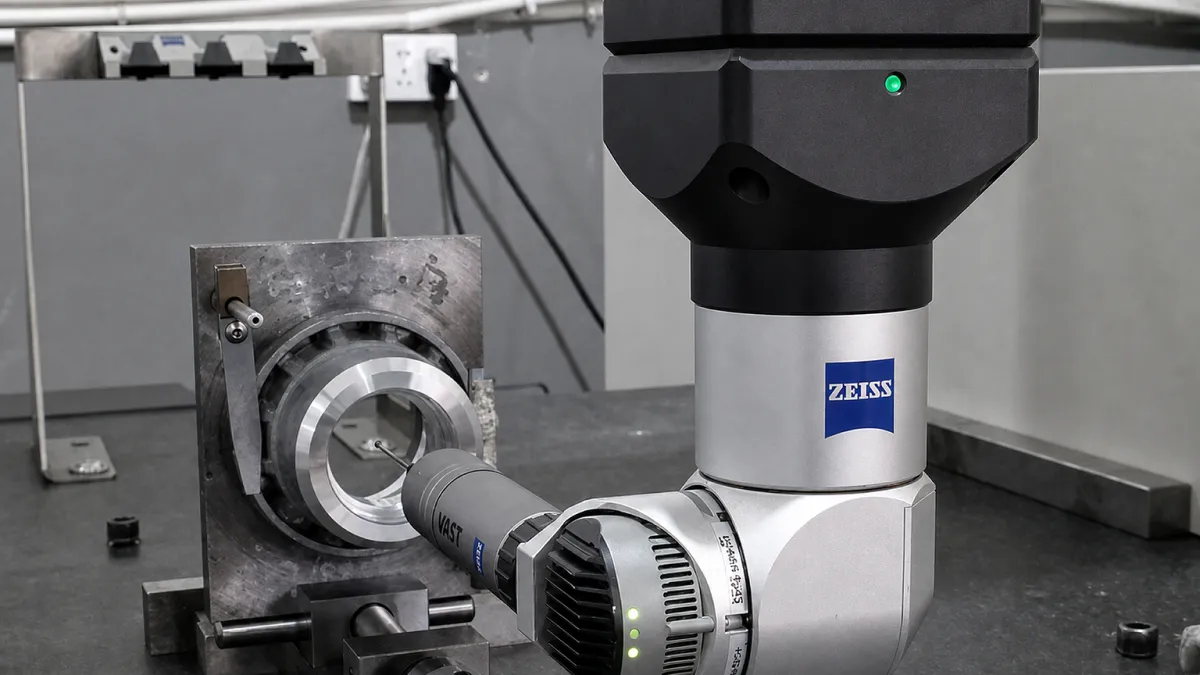
Inspection should match the failure mode: CMM for dimensions, spectrometer analysis for alloy composition, and X-ray, sectioning, or leak testing for internal soundness. Each result should point back to a process variable, from melting and transfer to injection, venting, cooling, or die condition.
| Risk | Likely process cause | Control point |
|---|---|---|
| Cold shut | Low metal or die temperature, slow filling, long thin flow path | Temperature window, shot speed, gate position, wall-flow review |
| Gas porosity | Air entrainment, poor venting, excessive turbulence | Slow-shot profile, vent and overflow design, vacuum evaluation |
| Shrinkage porosity | Isolated hot spots or insufficient feeding during solidification | Thermal balance, intensification, overflow placement, section design |
| Flash | Clamping margin, die wear, or local sealing problems | Tonnage review, die maintenance, projected-area verification |
| Soldering | Local die overheating or unsuitable release conditions | Cooling balance, die surface condition, spray and temperature control |
Meituo links these controls to specific equipment and records: alloy batches are verified by spectral analysis, molds are developed with UG 3D modeling and JSCAST flow simulation, and dimensions and internal defects are checked with Zeiss CMM and X-ray equipment under IATF 16949 and ISO 9001 systems. These controls make the process review traceable from melt to finished part.
Is Cold Chamber Die Casting Right for Your Part?
Cold chamber die casting fits parts made from aluminum or other higher-melting alloys that need repeatable geometry, integrated ribs, bosses, mounting points, or heat-dissipation features. It can also reduce machining from solid stock or consolidate several assembled pieces into one casting.
Before requesting a quote, prepare the information that lets the supplier evaluate the cold chamber process rather than only calculate a piece price.
- Alloy grade and applicable material standard, or the performance target if the alloy is still open
- 2D drawing and 3D model with datum scheme and critical-to-quality features
- Part weight, envelope dimensions, nominal and minimum wall thickness
- Estimated projected area, if available, plus any known gate or parting-line restrictions
- Annual volume, batch size, launch timing, and expected product life
- Air-tightness, pressure-tightness, strength, or fatigue requirements
- Features that require CNC machining after casting
- Surface finishing, coating, marking, and packaging requirements
A useful supplier response should state the proposed alloy, machine range, die concept, gate and venting approach, machining plan, inspection method, and main cost drivers. Tooling, cycle time, alloy, trimming, machining, finishing, and quality requirements all affect aluminum die casting cost.
Meituo operates 20 aluminum die casting machines from 160T to 1650T with annual output near 10,000 tons. Mold development uses UG 3D modeling, JSCAST simulation, and nearly 30 CNC and EDM machines. For a custom aluminum die casting review, send the drawing, annual volume, and critical requirements.