The difference between hot chamber and cold chamber die casting comes down to one design decision: where the metal melts. In hot chamber die casting, the injection mechanism sits inside the molten metal and injects it directly into the die. In cold chamber die casting, the metal is melted in a separate furnace and ladled into a shot sleeve before each injection. That single difference decides which alloys each process can run, how fast it cycles, how long the die lasts, and what each part costs. This guide compares both processes on working principle, alloys, cycle rate, die life, and cost, then gives you a selection framework and an RFQ checklist you can send to any die caster.
Hot Chamber vs Cold Chamber Die Casting at a Glance
If you only need the short answer, this table covers the eight differences that matter most when sourcing parts:
| Factor | Hot Chamber Die Casting | Cold Chamber Die Casting |
|---|---|---|
| Melting & injection | Furnace built into the machine; gooseneck submerged in molten metal | Separate furnace; metal ladled into a shot sleeve per cycle |
| Typical alloys | Zinc (Zamak 3, Zamak 5), magnesium, tin, lead | Aluminum (A380, ADC12, A383), brass, copper alloys |
| Alloy melting range | Roughly below 450 °C, plus magnesium | 600 °C and above |
| Cycle rate | About 4–5 shots per minute; higher for small zinc parts | About 2–3 shots per minute |
| Typical die life | Often 1,000,000+ shots on zinc tooling | Typically 100,000–150,000 shots on aluminum tooling |
| Part size | Small to medium components | Medium to large structural components |
| Wall thickness capability | Down to about 0.5 mm on small zinc parts | Commonly 1.5–3 mm on aluminum parts |
| Typical parts | Housings, brackets, connectors, decorative hardware, lock and hinge parts | Motor housings, heat sinks, structural brackets, appliance and automotive components |
The rest of this article explains why these differences exist and how to use them when you specify a part.
What Is Hot Chamber Die Casting?
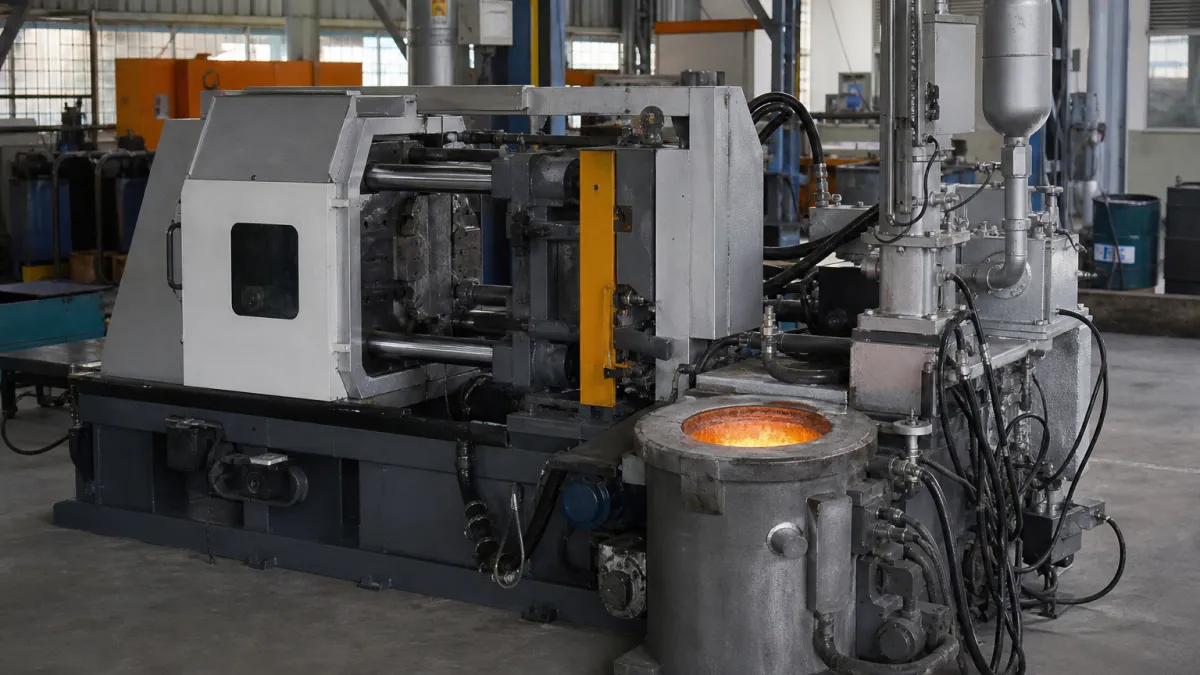
Hot chamber die casting is a high-pressure die casting process where the injection system — the gooseneck, plunger, and nozzle — is permanently submerged in a bath of molten metal held inside the machine. When the die closes, the plunger drives molten metal through the gooseneck and nozzle directly into the cavity. The stroke is short, the metal path is short, and no separate transfer step exists.
That architecture is why hot chamber machines cycle fast. There is no ladling, no shot sleeve fill, and no biscuit to trim away from a cold transfer channel. Small zinc parts routinely run several cycles per minute, which is the highest productivity of any casting process.
The same architecture also limits the alloys. Any metal that attacks the ferrous gooseneck and plunger cannot stay in contact with those parts. Aluminum dissolves iron at die casting temperatures, so running aluminum in a hot chamber machine would erode the injection components in short order. Hot chamber is therefore reserved for low-melting alloys: zinc alloys such as Zamak 3 and Zamak 5 are the dominant choice, with magnesium, tin, and lead alloys also compatible.
Two more consequences follow from the submerged design. The melt stays cleaner because it is never exposed to air during transfer, so zinc parts show low porosity and excellent surface finish for plating. And because zinc is gentle on tool steel, hot chamber dies regularly exceed one million shots — die cost per part drops to a fraction of what most buyers expect.
Our own zinc production runs exactly this way. Meituo operates in-house hot chamber lines for Zamak 3 and Zamak 5 parts, and the same lines scale from a 500-piece pilot run to 500,000 pieces per year without retooling. For the full process detail, see our zinc hot chamber die casting process guide.
What Is Cold Chamber Die Casting?
Cold chamber die casting is the variant built for high-melting alloys. The metal — most often aluminum — is melted in a separate furnace, then transferred by ladle into an unheated shot sleeve mounted on the machine. A hydraulic plunger drives the metal from the sleeve into the die cavity at pressures that can exceed 10,000 psi.
Keeping the injection system out of the melt solves the corrosion problem. The plunger and sleeve contact molten aluminum for only a second or two per cycle, so tool steel survives. This is what makes aluminum, brass, and copper alloys practical to die cast at production volumes.
The transfer step costs time. Each cycle adds ladling, sleeve filling, and biscuit ejection, so cold chamber machines run roughly half the cycle rate of hot chamber machines. The brief air exposure during transfer also introduces a higher risk of oxidation and entrained air, which is why shot profile control and vacuum assistance matter more on cold chamber programs.
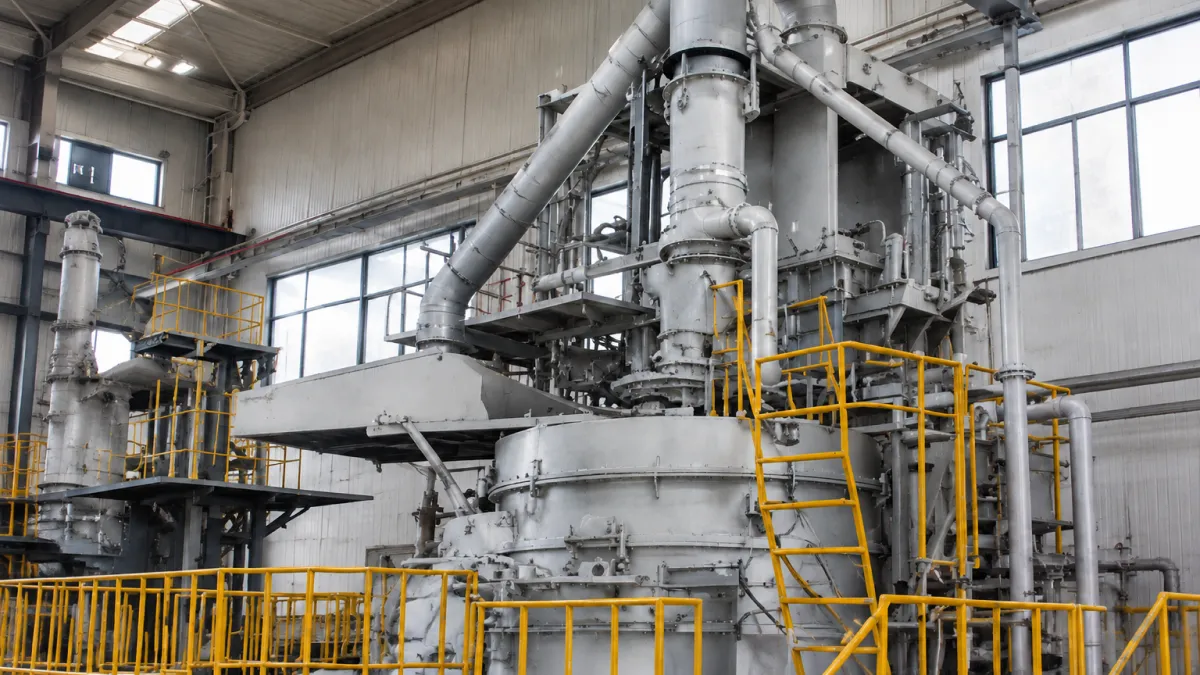
Cold chamber machines are also built much larger. Aluminum structural parts for automotive and appliance programs need clamping forces that small zinc machines cannot deliver. At Meituo, the cold chamber side runs 20 aluminum die casting machines from 160T to 1650T with automated melting, producing close to 10,000 tons of castings per year. The complete workflow is covered in our cold chamber aluminum die casting process guide.
Key Differences Between Hot and Cold Chamber Die Casting
The at-a-glance table gives the summary. Here is what each difference actually means for your project.
Cycle time and unit cost
Hot chamber wins on speed, and speed is the largest driver of unit cost at volume. Doubling the cycle rate roughly halves the machine-hour content of each part. For small zinc components produced in the hundreds of thousands, this is decisive. Cold chamber's slower cycle is simply the price of running aluminum.
Die life and tooling economics
Zinc's low melting point and low aggressiveness to H13 tool steel give hot chamber dies a service life that routinely passes one million shots. Aluminum's higher temperature and its tendency to solder to the die surface limit cold chamber dies to roughly 100,000–150,000 shots before major refurbishment. When you compare tooling quotes, normalize on die cost per shot, not the headline mold price — a more expensive zinc die often wins on that basis.
Alloy compatibility and part performance
This difference is absolute, not a trade-off. Zinc, magnesium, tin, and lead go to hot chamber. Aluminum, brass, and copper go to cold chamber. If your drawing already specifies the alloy, the process is decided. The selection question only exists when the material is still open.
Melt quality and defect tendency
Hot chamber's sealed melt path means less oxidation and less gas pickup. Cold chamber's ladling step introduces a free surface and a biscuit that solidifies in the sleeve, so entrained air and cold flakes need active control through shot profiles, die venting, and sometimes vacuum. Both processes produce sound parts when the process is engineered correctly; the difference is how much engineering attention the melt path demands.
Machine investment
Hot chamber machines are smaller, simpler, and cheaper per clamping ton. Cold chamber machines cost more, and the separate melting furnace adds floor space, energy, and maintenance. This matters mainly to foundries, but it explains why cold chamber shops quote higher machine-hour rates.
Hot Chamber or Cold Chamber: How to Choose for Your Part
Work through these three questions in order.
1. Is the alloy already specified? If yes, the decision is made. Zinc alloys (Zamak 3, Zamak 5, ZA-8) mean hot chamber. Aluminum alloys (A380, ADC12, A383) mean cold chamber. No reputable die caster will run aluminum on hot chamber equipment regardless of price pressure, because the machine cannot survive it.
2. If the alloy is open, what does the part need? Small parts under about 2 kg with thin walls, fine detail, threaded inserts, or a plated decorative finish favor zinc and the hot chamber route. Larger parts, structural loads, heat dissipation requirements, or weight limits favor aluminum and cold chamber. Our zinc vs aluminum die casting comparison walks through the material-level trade-offs in detail.
3. What does the volume look like? Hot chamber's cycle advantage grows with volume. Above roughly 100,000 parts per year on a small component, zinc's combined cycle rate and die life usually produce the lowest unit cost of any casting route. Below pilot volumes, the alloy decision matters more than the process economics.
When you send the RFQ, include these fields so the foundry can confirm the process on the first pass:
- Alloy grade and standard (or "open to recommendation")
- Annual volume and typical batch size
- Part weight and envelope dimensions
- Minimum and nominal wall thickness
- Critical tolerances and CTQ features
- Air-tightness or pressure-tightness requirements
- Surface finish and any plating or coating specification
- Target price, if you have one
A supplier who answers with a process recommendation, a die life estimate, and a unit price breakdown against this list is a supplier who has actually reviewed your part.
One Factory, Both Processes: How We Run Hot and Cold Chamber Die Casting
Most articles on this topic are written from the outside. We run both processes in the same 33,000 m² plant, so the comparison above reflects daily production reality rather than textbook description.
On the hot chamber side, Meituo's zinc lines cast Zamak 3 and Zamak 5 parts for appliance, automotive, and industrial programs, with tooling designed and built in-house using UG 3D modeling and JSCAST flow simulation. On the cold chamber side, 20 aluminum machines from 160T to 1650T cover everything from small precision housings to large structural castings, supported by spectrometer melt control, CMM inspection, and X-ray testing under IATF 16949 and ISO 9001 systems.
For buyers, the practical benefit is that one RFQ can be evaluated against both processes at once. If your part sits near the zinc-aluminum boundary, we quote both routes with real machine and tooling data instead of a theoretical recommendation. Long-term OEM programs with brands such as Electrolux, BSH, Samsung, Midea, and Hisense run on exactly this setup.
Send your drawings through our zinc die casting or aluminum die casting pages — or send one RFQ and let us recommend the route.