Die casting injects molten metal into a reusable steel die under pressure. Sand casting gravity-pours metal into an expendable sand mold. That difference shapes tooling cost, production speed, part size, accuracy, and alloy choice. Die casting generally suits stable production of detailed parts; sand casting is often preferred for large components, complex cores, and lower volumes. This guide compares cost, quality, and part fit, with a practical checklist for buyers considering a move from sand casting to die casting.
Die Casting vs Sand Casting: What Is the Difference?
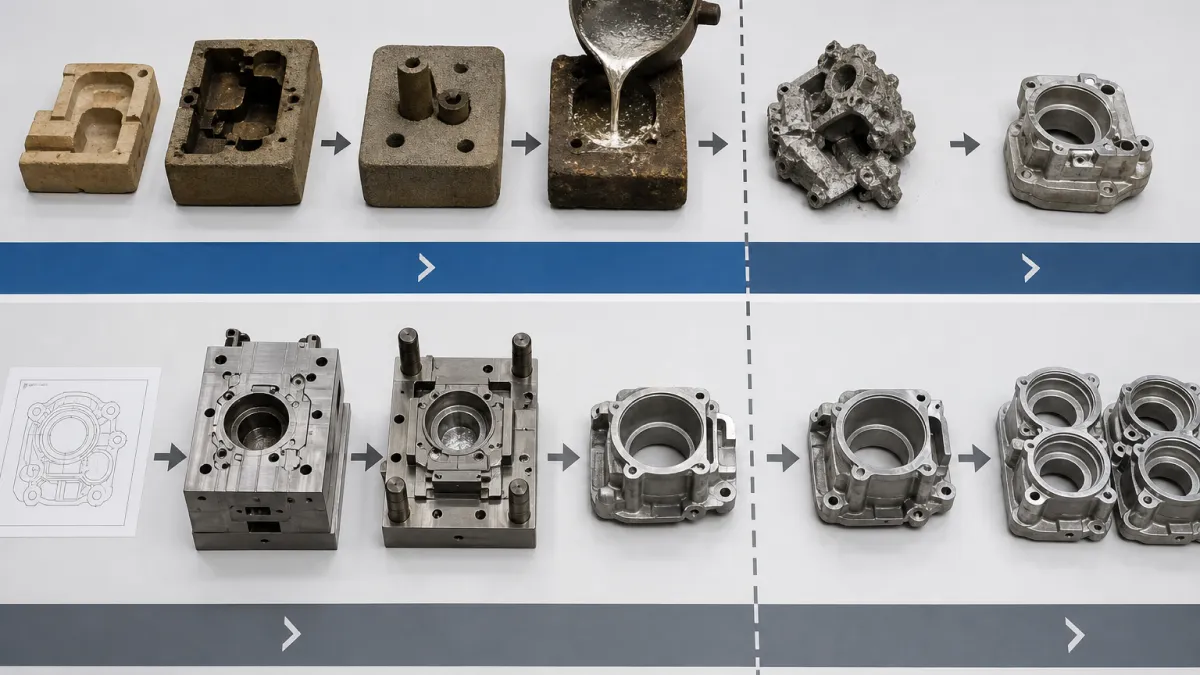
Die casting uses a permanent steel die and high-pressure injection. Sand casting uses a pattern to form a bonded-sand mold, then fills that mold under gravity. The pattern can be reused, but the sand mold is normally broken away to recover the casting. Sand may be reclaimed through a separate handling system, which is different from reusing the intact mold.
Reusable dies and pressure injection vs sand molds and gravity pouring
A die-casting die contains the cavity, gating, vents, cooling channels, and ejection system needed for repeated shots. Sand casting builds the cavity and any required cores for each molding cycle. These differences explain most of the practical trade-offs between the two processes.
| Factor | High-pressure die casting | Sand casting |
|---|---|---|
| Tooling | Reusable precision steel die | Expendable sand mold formed around a reusable pattern |
| Filling | High-pressure injection | Gravity pouring |
| Best-known advantage | Repeatable detail and efficient production at volume | Large parts, complex cores, and lower tooling commitment |
| Surface and accuracy | Generally smoother and more accurate as-cast | Generally rougher, with more allowance on functional surfaces |
| Geometry | Thin walls, ribs, bosses, and integrated features | Large envelopes and complex internal passages |
| Design changes | Die modification can be costly | Pattern changes are usually easier |
| Alloys | Mainly suitable non-ferrous casting alloys | Ferrous and non-ferrous alloys |
Gravity pouring into a sand mold is different from gravity die casting, which uses a reusable metal mold. The similar wording does not make them the same process.
Which Process Fits Your Part?
Choose high-pressure die casting for stable production of detailed, thin-walled parts made from suitable non-ferrous alloys. Choose sand casting for large components, complex sand cores, frequent design changes, lower volumes, or alloys outside the usual die-casting range. If the design is still evolving, sand casting usually offers more flexibility; if demand is stable and tooling can be justified, evaluate die casting.
Geometry, material, and design stability
The advantages of die casting are most useful when a part needs repeated thin walls, ribs, bosses, and integrated detail at production volume. Sand casting is a strong candidate for large envelopes, heavy sections, and internal passages formed with sand cores. Sand casting can also process gray iron, ductile iron, carbon steel, and other alloys outside the normal high-pressure die-casting range.
| Your requirement | Likely starting point | What to check next |
|---|---|---|
| Large envelope or heavy section | Sand casting | Solidification, feeding, handling, and machining stock |
| Repeated thin walls and integrated detail | Die casting | Filling, venting, draft, die complexity, and demand |
| Complex internal passages | Often sand casting | Core design, cleaning, pressure tightness, and inspection |
| Frequent geometry revisions | Often sand casting | Pattern change cost and validation scope |
| Steel or cast-iron requirement | Sand casting or another suitable casting route | Alloy standard, pouring temperature, and supplier capability |
| Stable aluminum part at repeat volume | Die casting candidate | Alloy conversion, tooling business case, and critical features |
For material background, our guide to cast and wrought aluminum alloys explains why a wrought designation used in a machined component cannot simply be carried into a casting specification.
Accuracy, surface finish, and verification
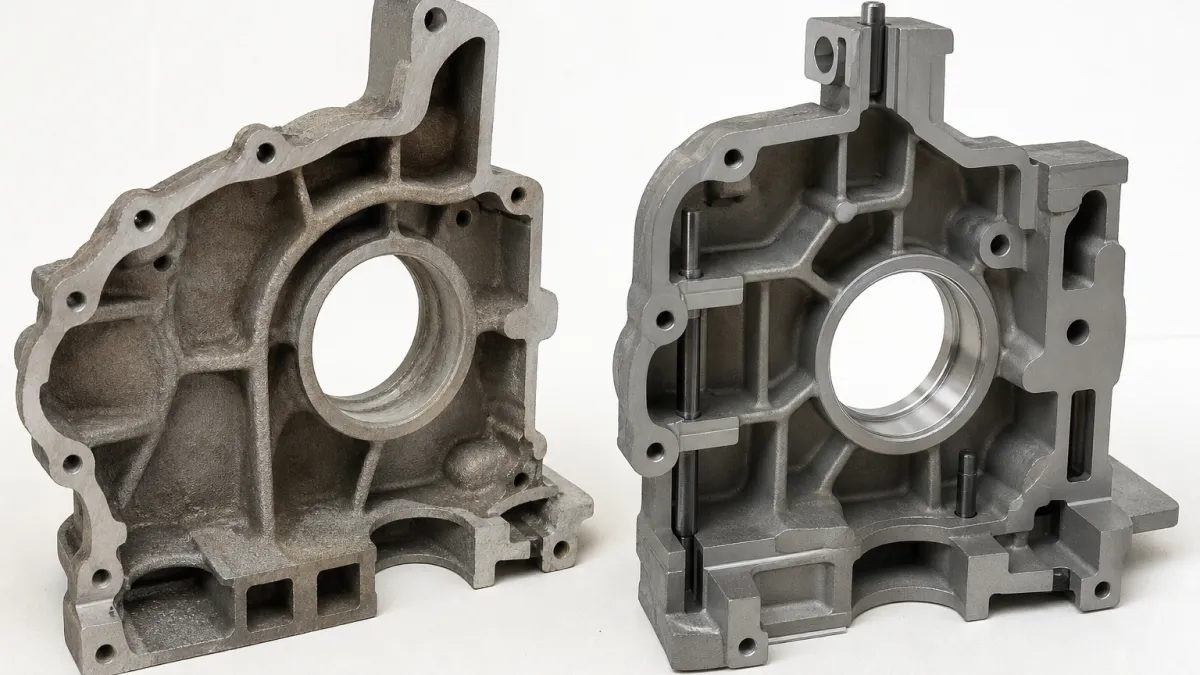
Die casting generally provides smoother surfaces and tighter as-cast dimensional control. Sand castings commonly need more machining allowance on functional surfaces, although sand selection and process control can improve the result. Both routes may need machining for bearing bores, threads, datums, and sealing faces, so the comparison should use finished requirements rather than the casting alone.
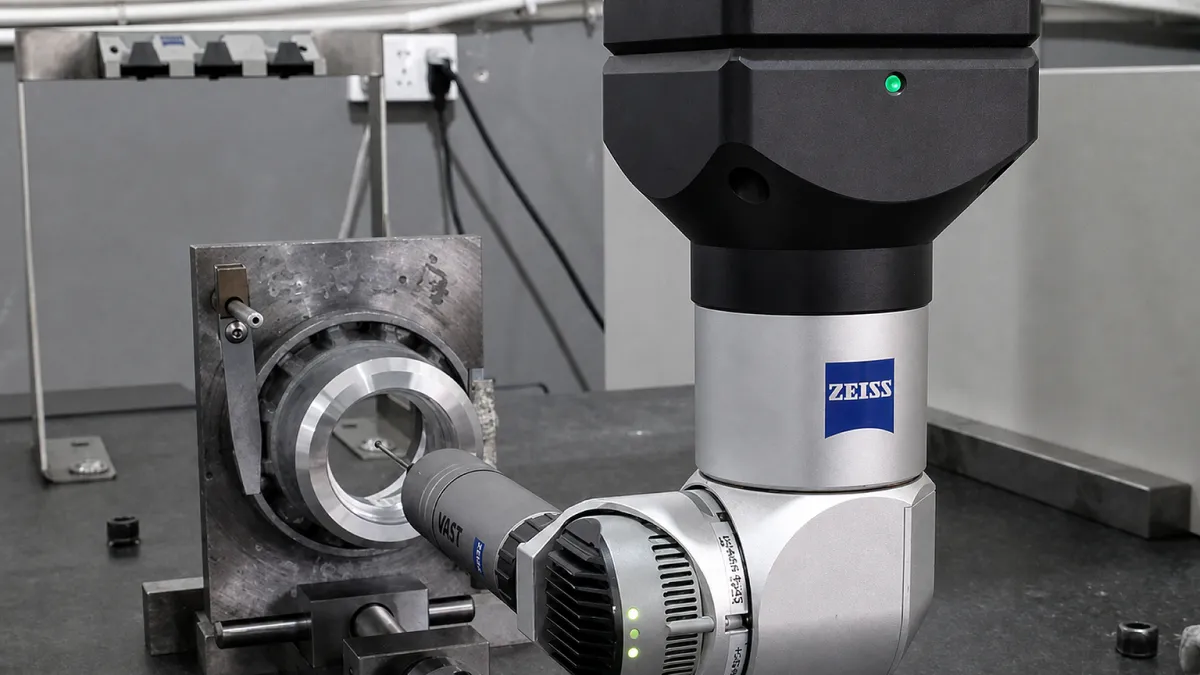
Meituo's washing machine spider specifies bearing tolerance control within 0.005 mm for the finished component. This is a product-specific finished requirement, not a general as-cast tolerance for either process. Spectral analysis, CMM, and X-ray can then verify alloy composition, dimensions, and specified internal-defect risks.
Die Casting vs Sand Casting Cost and Lead Time
Sand casting usually requires less investment in production-specific metal tooling. Die casting requires a precision steel die and related launch work. The better economic choice depends on how those fixed costs compare with recurring molding, machining, finishing, inspection, and revision costs over the program.
Tooling and recurring cost
For a meaningful die casting vs sand casting cost comparison, use the same drawing revision and finished-part scope. Include the pattern or die, core boxes where applicable, trials, melting, molding, trimming, sand handling, machining, finishing, inspection, and expected losses. Die maintenance and future revisions also belong in the lifecycle review.
There is no universal volume threshold. A large, simple component may remain practical in sand casting at repeat volume, while a smaller housing with extensive machining may justify die casting sooner. Part size, cavity count, alloy, molding method, finishing scope, and demand stability all affect the answer.
First-part lead time and repeat production
A sand-cast prototype may be available before a production die could be completed. Once the die is validated, high-pressure die casting can produce repeated geometry with less mold preparation per part. The launch review should therefore separate design readiness, tooling readiness, approved first articles, and required production rate.
The wider aluminum die casting process from mold design to mass production shows why die development and validation belong in the schedule. For the cost side, see our guide to aluminum die casting cost.
When Can You Switch from Sand Casting to Die Casting?
A conversion review makes sense when repeat demand is credible, the design is approaching stability, and tooling fits the program budget and launch window. A successful sand casting does not automatically become a good die casting. The technical route and the business case both need to work.
Conditions for a conversion review
- Annual volume, product life, order pattern, and spare-parts demand are documented.
- Fit, function, major interfaces, and cosmetic requirements have been validated.
- The proposed alloy meets mechanical, corrosion, thermal, and finishing requirements.
- The launch plan includes die trials, first-article approval, and potential revisions.
- Critical features have a defined casting, machining, and inspection route.
Design changes and validation
| Review area | What must be checked |
|---|---|
| Alloy and heat treatment | Service performance without carrying over unsuitable sand-casting assumptions |
| Walls and radii | Heavy sections and abrupt transitions that affect filling and solidification |
| Draft, parting, and ejection | Release from a rigid die and acceptable parting or ejector locations |
| Internal features | Sand cores that need elimination, replacement, or another forming method |
| Gating, vents, and cooling | Filling, air removal, thermal balance, and defect control |
| Machining and datums | Machining stock and consistent location of the cast blank |
| CTQ and appearance | Dimensions, sealing areas, cosmetic surfaces, and approval tests |
Meituo uses UG for mold engineering and JSCAST for flow simulation, with aluminum die-casting machines from 160T to 1650T and precision machining support. Trial castings still need dimensional and functional verification before release. A380 and ADC12 can be evaluated for suitable programs, but a sand-cast alloy or heat-treatment route should not be carried into high-pressure die casting without review.
What Should You Send for a Comparable Quote?
Send the controlled 2D drawing and 3D model, current and target alloy, envelope and weight, annual and lifecycle volume, order pattern, critical dimensions, internal passages, cosmetic areas, applicable tests, finishing, and required launch timing. Include the current process and any known problems with porosity, machining time, distortion, or assembly.
Ask for a response that explains the recommended route, required drawing changes, tooling and validation steps, recurring-cost scope, and inspection plan. Tooling, machining, finishing, testing, and other assumptions should be stated clearly enough for a like-for-like comparison.
Meituo evaluates suitable high-pressure die-casting projects through mold development, casting, machining, and inspection. We do not provide sand-casting capacity or quotations. For custom aluminum die casting, send your drawing and demand profile so our team can assess whether the part fits this production route.